Certificate of Origin for US Vehicle Exports to the EU
Under EU Regulation 2026/1455, in force since 1 July 2026, vehicles built in the USA can enter the European Union at 0% import duty instead of the standard 10%, until 31 December 2029. In practice, exporters we work with have been told by EU customs that the 0% rate is applied to clean-title vehicles; salvage and rebuilt titles have not qualified. This appears to vary by port of entry, so confirm with your customs broker for your destination. Proving US origin is the importer's job, and a Certificate of Origin is the recommended evidence that closes that burden of proof. Y7 Logistics, a Licensed & Bonded FMCSA Broker (USDOT #4427359, MC #1741537), acts as a standing filing agent: we prepare the certificate, file it electronically with the issuing chamber, and deliver the issued eCO to your export document set. The service stands on its own. You do not need to be a Y7 transport client to order one.
What a Certificate of Origin Does at EU Import
EU Regulation 2026/1455, in force since 1 July 2026, sets a 0% import duty rate, against the standard rate of 10%, for vehicles entering the European Union that were built in the USA: US-made cars, with origin decided under the EU's non-preferential rules of origin. The certificate itself is recommended, not mandatory: no single document is prescribed, and the burden of proving US origin sits with the importer. A chamber-issued Certificate of Origin, with the origin proof and transport documents behind it, is the practical way to discharge that burden; with it, a qualifying shipment of a US-built vehicle is eligible for the 0% rate, and an importer who cannot satisfy customs clears at the old rate.
In practice, exporters we work with have been told by EU customs that the 0% rate is applied to clean-title vehicles; salvage and rebuilt titles have not qualified. This appears to vary by port of entry, so confirm with your customs broker for your destination.
The rate is a defined window: it runs until 31 December 2029, with a review due by June 2029, and may be suspended earlier if the conditions of the EU-US trade framework cease to be met.
The texts, on EUR-Lex: Regulation (EU) 2026/1455 (the 0% rate and its dates) and Implementing Regulation (EU) 2026/1422 (Article 59a, the proof of origin and direct transport). Not sure where a car was built? Check the VIN against NHTSA before you request.
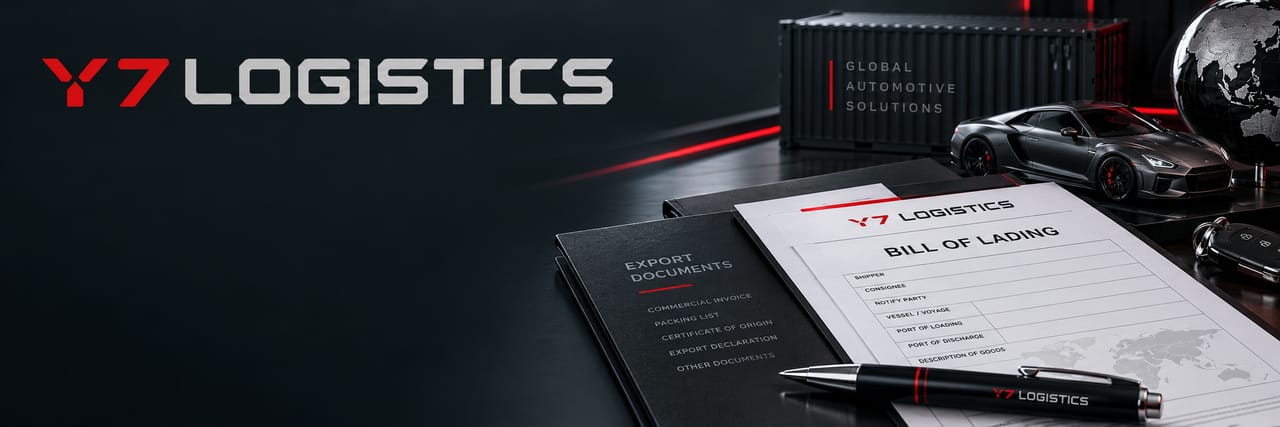
The certificate is issued electronically (an eCO) and joins the rest of the export document set your freight forwarder presents at destination.
The Twin Proof: US Origin and Direct Transport (Article 59a UCC-IA)
The 0% rate for US-built vehicles is conditional, and the condition lives in a separate instrument from the rate itself. Commission Implementing Regulation (EU) 2026/1422 amended the UCC Implementing Act (Regulation 2015/2447) to insert a new Article 59a, which requires the importer to prove two things at once: that the vehicle is of non-preferential US origin, and that the shipment traveled directly, arriving unaltered. In plain words: the vehicle must move from the US to the EU destination as one continuous shipment, and what arrives must be the vehicle that left. Where the routing passes through a third country, the operator must be able to show the vehicle stayed under customs supervision there and was not altered. The certificate covers the origin half; the routing documents cover the other.
The evidence must be in the declarant's possession when the customs declaration is lodged: it is assembled before the vehicle ships, not reconstructed after. Direct transport is a property of the shipment, not of the paperwork, which is why we confirm eligibility per shipment rather than assuming it. The routing evidence is reviewed when the document package is assembled, and anything that undermines direct transport surfaces before we file.
Who Qualifies: The Eligibility Checklist
- The vehicle was built in the USA. Origin attaches at manufacture, not at the auction where the vehicle was bought.
- Title status: the regulation sets no title condition. In practice, exporters we work with have been told by EU customs that the 0% rate is applied to clean-title vehicles; salvage and rebuilt titles have not qualified. This appears to vary by port of entry, so confirm with your customs broker for your destination.
- The destination is in the European Union.
- The shipment meets the direct-transport requirement (Article 59a UCC-IA).
- The supporting documentation is in order.
- Eligibility is confirmed per shipment before filing.
We confirm every item against your shipment documents before the certificate is filed.
Which cars are US-built? The VIN decides
The first character of the VIN shows the country of assembly: 1, 4 or 5 means the United States, and so do some codes that start with 7, used by newer US plants of Tesla, Rivian, Honda and Toyota. A 2 means Canada and a 3 means Mexico. That is a quick first check before you bid; the full answer is the assembly plant NHTSA records for the VIN.
The model name does not decide. The same model is often built in more than one country: a Toyota RAV4 can come from Kentucky, Ontario or Japan, a Chevrolet Silverado from Indiana or Mexico, a Hyundai Tucson from Alabama or South Korea, while the Chevrolet Equinox and the Ford Bronco Sport are built outside the US.
Examples of models commonly assembled in the United States, with the plant NHTSA's vPIC database records for their plant code:
- BMW X5: Greer (Spartanburg), South Carolina
- Mercedes-Benz GLE: Vance, Alabama
- Toyota Camry: Georgetown, Kentucky
- Honda Accord: Marysville, Ohio
- Hyundai Santa Fe: Montgomery, Alabama
- Kia Telluride: West Point, Georgia
- Tesla Model Y: Fremont, California, and Austin, Texas
- Ford F-150: Dearborn, Michigan, and Claycomo, Missouri
- Ford Mustang: Flat Rock, Michigan
- Jeep Grand Cherokee: Detroit, Michigan
- Chevrolet Corvette: Bowling Green, Kentucky
A model on this list is not a promise: check the VIN of the car you are buying.
Check a VIN now: NHTSA's answer in a few seconds, with the request form right under it.
Pricing and Turnaround
| Service | Price | Turnaround |
|---|---|---|
| Established Y7 exporter clients | $99 per certificate | 7 business days to issued eCO |
| One-off request (not a transport client) | $150 per certificate | 7 business days to issued eCO |
Custom per-client pricing is available for established exporter accounts. There is no markup hidden elsewhere: the certificate fee is the whole price of the service.
The Document Checklist
Eligibility, checked first
Before any documents move, we screen the vehicle itself. The VIN is decoded against the federal NHTSA vPIC database, and the plant country must be United States. The title type is recorded at the same step: bill-of-sale-only, certificate of destruction, non-repairable and parts-only titles cannot get a certificate. A salvage or rebuilt title can, but see the note on title status above before you count on the 0% rate. If the vehicle fails the origin check, you find out here, before anything is filed or paid for.
What you provide, per shipment
- Auction invoice or buyer receipt (Copart, IAA, Manheim).
- The title, with its type confirmed.
- Chain invoice: only when the auction buyer is not the exporter (the vehicle was resold before export). If you bought the vehicle at the auction and you are the exporter, this item does not apply to you.
- Ocean booking or through bill of lading. This is what supports the direct-transport condition.
- AES ITN, where already filed.
- Party details: legal name, address, EIN or VAT/EORI, and the signing person's name and title.
- Signed agent authorization: once per company, not per vehicle. After your first request it is already on file, and repeat shipments skip this item.
What Y7 prepares (included in the fee)
- NHTSA origin proof: plant country, city, and manufacturer from the federal vPIC decode.
- Commercial invoice.
- Declaration of origin.
- The assembled filing package, submitted to the chamber as standing agent.
There is no single mandatory certificate form: EU practice accepts free evidence of origin. A chamber-issued eCO together with the origin proof, the title chain, and the through bill of lading is the practical evidence package this checklist assembles.
How the Filing Works
- You send the shipment documents. The items from the checklist above: the auction paperwork, the title, the routing documents, and the party details.
- Y7 prepares and files. As standing filing agent, we verify the eligibility checklist, prepare the certificate, and file it electronically with the issuing chamber.
- You receive the issued eCO within 7 business days of the request, ready for your export document set.
One thing we state plainly rather than promise around: Y7 prepares and files the certificate; admissibility and the duty treatment at import are determined by the customs authority of the destination country.
Request a Certificate of Origin
Send the request below and we reply within 2 business hours from info@y7agency.com. If you are shipping the vehicle with us, mention the order and we fold the certificate into your existing document flow; see the exporter program for the transport side.
Established exporter clients get the $99 rate: log in to the customer portal and attach the request to your order, or use the form below.
Check a VIN: was this car built in the US?
Enter the VIN and we look it up in NHTSA's vPIC, the US government's vehicle database, which records the plant where the car was assembled. A certificate of US origin can only be issued for a car built in the United States, so this shows in a few seconds whether a request is worth sending.
The check shows where the car was built. It is not a ruling on the duty rate at your destination.
Frequently Asked Questions
Is a Certificate of Origin mandatory?
No. No single document is prescribed, and customs accepts free evidence of origin. What is mandatory is the proof itself: the burden of establishing US origin sits with the importer, and an importer who cannot satisfy customs clears at the old rate. A chamber-issued eCO with the supporting package is the practical way to discharge that burden.
Does a salvage or rebuilt title qualify for the 0% rate?
The regulation itself sets no title condition: Regulation (EU) 2026/1455 grants 0% to US-built vehicles from 1 July 2026 to 31 December 2029, when the importer proves US origin and direct transport. In practice, exporters we work with have been told by EU customs that the 0% rate is applied to clean-title vehicles; salvage and rebuilt titles have not qualified. This appears to vary by port of entry, so confirm with your customs broker for your destination. We record the title type when we check the VIN; bill-of-sale-only, certificate of destruction, non-repairable and parts-only titles cannot get a certificate.
How much does a Certificate of Origin cost?
Two published prices: $99 per certificate for established Y7 exporter clients (custom per-client pricing is possible for volume accounts), and $150 for a one-off request submitted through the website by an exporter who is not a Y7 transport client. Both include preparation and filing.
How long does it take to get the certificate?
Seven business days from the request to the issued eCO. Start the request as soon as the vehicle and destination are fixed so the certificate is ready before your vessel window.
Do I need to be a Y7 transport client?
No. The one-off service at $150 exists exactly for European exporters who buy vehicles in the US and handle transport elsewhere. If you also need the auction-to-port leg, the exporter program covers both and the certificate drops to the client price.
What is the direct-transport requirement?
It is half of the twin proof required by Article 59a UCC-IA, inserted by Commission Implementing Regulation (EU) 2026/1422: the importer proves both that the vehicle is of US origin and that the shipment traveled directly and arrived unaltered, including customs supervision for any third-country transit. The 0% rate for US-built vehicles itself comes from EU Regulation 2026/1455. We confirm the condition, together with the rest of the eligibility checklist, per shipment before filing.
Who prepares and files the certificate?
Y7 acts as a standing filing agent: we prepare the certificate from your shipment documents and file it electronically with the issuing chamber. You receive the issued eCO for your export document set.
Ready to get started?
Transparent pricing, carriers checked before each dispatch, fast dispatch response.
Explore the Exporter Program